What actually happens
An examination that tells you something, then a plan with a re-check date fixed at the start.
- ★★★★★4.9 Google58 patient reviews
- 2Traction tablesOn site, used when indicated
- 0DowntimeDrive yourself home after
- 0Referral neededDirect access in Florida
- 5Towns servedPasco County
The visit
Find the level, test the function, fix a checkpoint
A compressed nerve is one of the few things in this field where the examination genuinely answers the question, which is why the first visit is mostly examination.

The pattern gets mapped
Where it travels, what sets it off, what settles it, what you have stopped doing. Nerve roots follow maps that barely vary between people, so the pattern narrows the level before any hands are involved.

Function gets tested
Sensation, strength and reflexes compared side to side, plus the movements that provoke and relieve. This is also where the red flags get screened, as a matter of course rather than on request.

A plan with a date on it
Care aimed at the level identified, and a re-check fixed at the start. If the findings have not moved by then, the plan changes or you get referred. No open ended course.
Worth knowing beforehand
Practical things
A doctor does the examinationEither Dr. Martin or Dr. More. Not a technician and not an assistant.
Florida has direct accessNo physician's referral is needed to be examined by a chiropractic physician in this state.
Bring any imaging you already haveA report or a disc from a previous scan is useful. It gets read alongside the examination rather than instead of it.
Wear something you can move inThe examination involves bending, turning and testing strength.
Traction tables are on siteTwo of them, used when the examination indicates it rather than as a default for everyone.
Forty seconds from Dr. Martin
In his own words
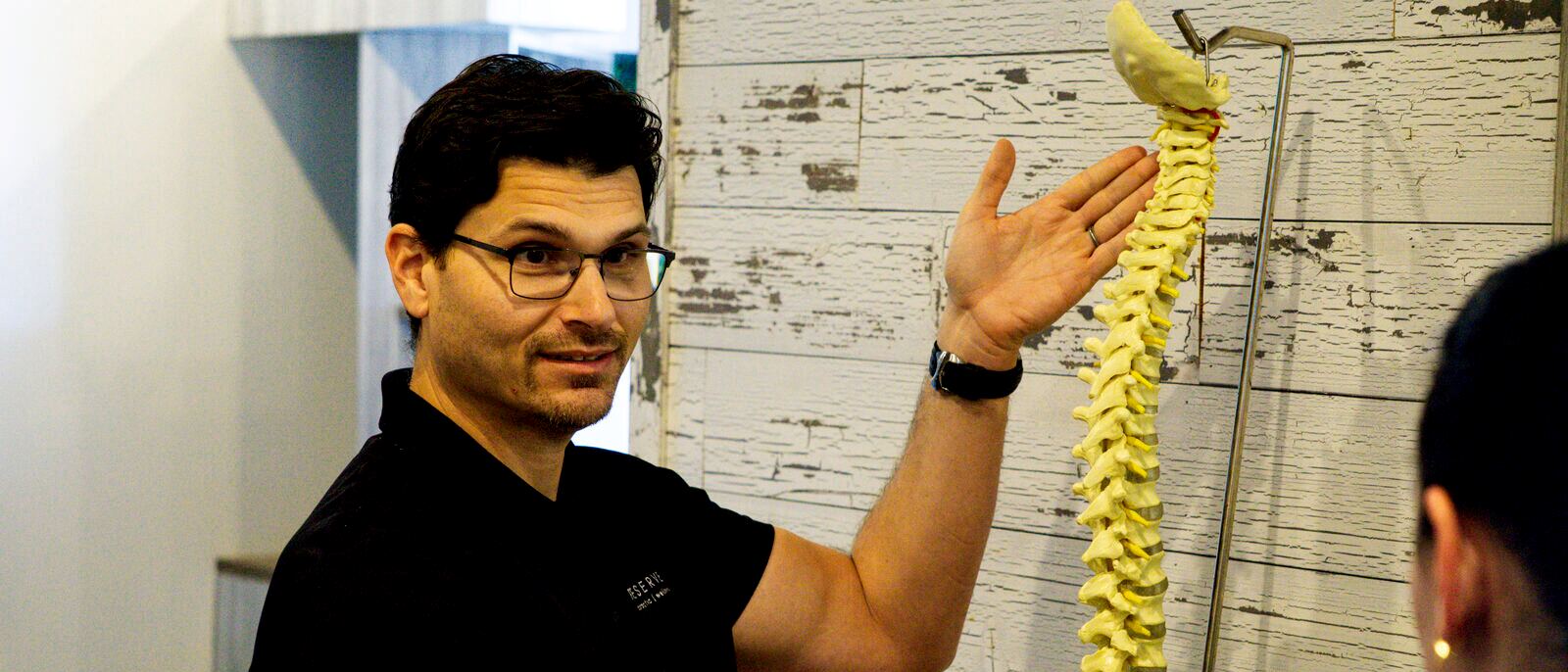
Rather than read a description of how the examination goes, watch him explain it.
Before you call
Who treats pinched nerves?
Chiropractic physicians and physical therapists handle the conservative majority. A physiatrist handles the medical pain management side. A spine surgeon is for a nerve losing function or one that has not responded to proper conservative care.
Severity decides which, not preference. The red flags page sets out the presentations that should skip straight past the conservative route.
How do you fix a pinched nerve?
By relieving the compression at the level where it is happening and calming the inflammation around the root, then reloading the segment so it stops recurring.
The part that gets skipped is the last one. Settling it is not the same as finishing, and a segment that has been guarded for weeks is weaker than it was. Reloading it on purpose is what turns a result into a lasting one.
Next step
Book the examination
One visit, a defined level, and a plan with a checkpoint rather than an open ended course.
- A doctor does the examination
- Red flags screened as a matter of course
- A re-check date fixed at the start
Speak to a doctor first. Nothing is booked on this page.